Lucknow: The Bahujan Samaj Party (BSP), once a dominant force in Indian politics representing Dalits and marginalized communities, is grappling with a prolonged decline and an uncertain future. With the emergence of Akash Anand as a key figure in its leadership, the party is attempting a revival ahead of the crucial 2027 Uttar Pradesh Assembly elections. However, questions remain over whether the young leader can reverse the party’s dwindling fortunes.
Founded by Kanshi Ram on the principles of social justice and Ambedkarite ideology, the BSP reached its peak under Mayawati. In 2007, the party secured a historic majority in Uttar Pradesh, winning 206 seats with over 30% vote share. Its “Sarvajan Hitay, Sarvajan Sukhay” model positioned it as a party capable of transcending caste boundaries.
Since 2012, however, the BSP’s trajectory has sharply declined. The party failed to win a single seat in the 2024 Lok Sabha elections despite contesting widely, while its vote share in Uttar Pradesh dropped significantly. In the 2025 Bihar Assembly polls, it managed just one seat by a narrow margin, underlining its shrinking electoral footprint.
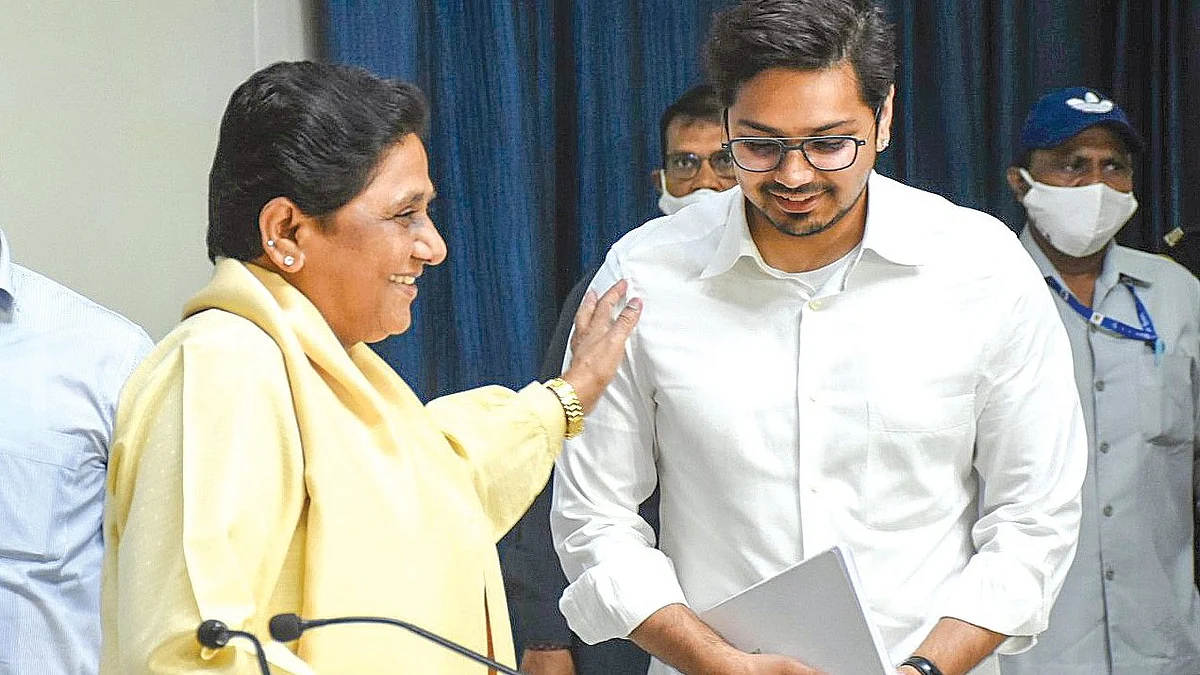
Amid this backdrop, Akash Anand—Mayawati’s nephew and a London-educated leader in his early 30s—has been projected as the face of generational change. Despite a turbulent journey marked by repeated appointments and removals within the party structure, he has been reinstated as a key organizer and is now leading outreach efforts, including rallies and district-level engagement across Uttar Pradesh.
Mayawati has publicly backed him, urging party workers to support him wholeheartedly. Anand has also taken center stage at major events, including a significant rally in Lucknow marking Kanshi Ram’s death anniversary, where he called for a BSP majority government in the state.
Party insiders see his youth, communication skills, and outreach as strengths that could reconnect the BSP with younger voters, particularly among Dalit communities. His emphasis on constitutional rights, social justice, and grassroots engagement has generated some enthusiasm within the cadre.

However, the challenges are formidable. Analysts point to internal instability, largely due to centralized decision-making by Mayawati and the lack of clarity on leadership succession. The perception of dynastic politics also sits uneasily with the BSP’s foundational anti-dynasty ethos.
Externally, the BSP faces stiff competition. Chandrashekhar Azad and his Azad Samaj Party have made significant inroads among non-Jatav Dalits and youth, while national parties continue to consolidate their own caste coalitions. The BSP’s decision to contest elections independently, avoiding alliances, further complicates its electoral prospects.
While Anand has initiated organizational rebuilding efforts, including cadre mobilization and extensive tours, experts believe that revival will require more than leadership change. Reconstructing the party’s once-successful social coalition, addressing internal divisions, and adopting flexible political strategies will be crucial.
With the 2027 Uttar Pradesh elections approaching, the BSP’s renewed activity signals intent, but not yet a turnaround. Whether Akash Anand can transform this momentum into a meaningful political resurgence remains uncertain.
For now, the party’s future hinges on its ability to adapt to changing political realities while staying true to its core mission. The coming years—and the verdict of voters—will determine whether the BSP can reclaim its past relevance or continue its slide into political marginality.